

10 3D Printing Ideas to Sell in South Africa
September 16, 2026 · 24 min read · Bronwyn Furno
You've got a 3D printer, a few promising designs, and a growing folder of ideas. The difficult question isn't what you can print. It's what people in South Africa will pay for, receive safely, and recommend to someone else.
The strongest products usually solve a clear everyday problem or serve a focused group, such as plant lovers, home bakers, tabletop gamers, small businesses, or people trying to organise their homes. This list of 3D printing ideas to sell focuses on products that can be tested without filling your home with unsold stock. For each one, consider the customer, printing difficulty, material choice, price, packaging, and the easiest way to validate demand.
You can sell through a simple Shopstar store, Instagram, Facebook, WhatsApp, or suitable marketplaces. South Africa's online retail sector grew to R96 billion in 2024, representing 8% of total retail sales, and it's projected to exceed R130 billion by the end of 2025, according to Mastercard's South African online retail report. That doesn't guarantee sales, but it does mean a small niche store can reach customers beyond your immediate area.
Start with a small test batch, learn from real buyers, and improve the product before expanding.
If you're still choosing a niche, compare your ideas with profitable Etsy niches, then adapt the concept for local customers, delivery costs, and South African buying habits.
Table of Contents
- 1. Custom Phone Stands and Desk Organizers
- 2. Plant Pots and Planters with Drainage
- 3. Cable Organizers and Cord Management
- 4. Jewellery Boxes and Display Organizers
- 5. Cookie Cutters and Baking Tools
- 6. Drawer Dividers and Storage Inserts
- 7. Miniature Figurines and Collectibles
- 8. Custom Phone Cases and Protective Covers
- 9. Bathroom and Shower Organizers
- 10. Desk Name Plates and Business Name Signs
- 10 3D-Printed Products Comparison
- Choose One Idea and Make Your First Sale
1. Custom Phone Stands and Desk Organizers
A phone stand is a sensible first product because the customer understands it immediately. A useful design can hold a phone during video calls, keep a charging cable in place, or create a tidier workspace. You can also make matching trays for pens, earbuds, keys, and other small desk items.
The printing process is usually manageable for a beginner, especially if the design uses simple shapes and doesn't need much support material. Lightweight products are easier to package and deliver than large décor pieces. The main trade-off is competition. A plain stand may look like a commodity, so colour choices, personalisation, and a clear use case matter.
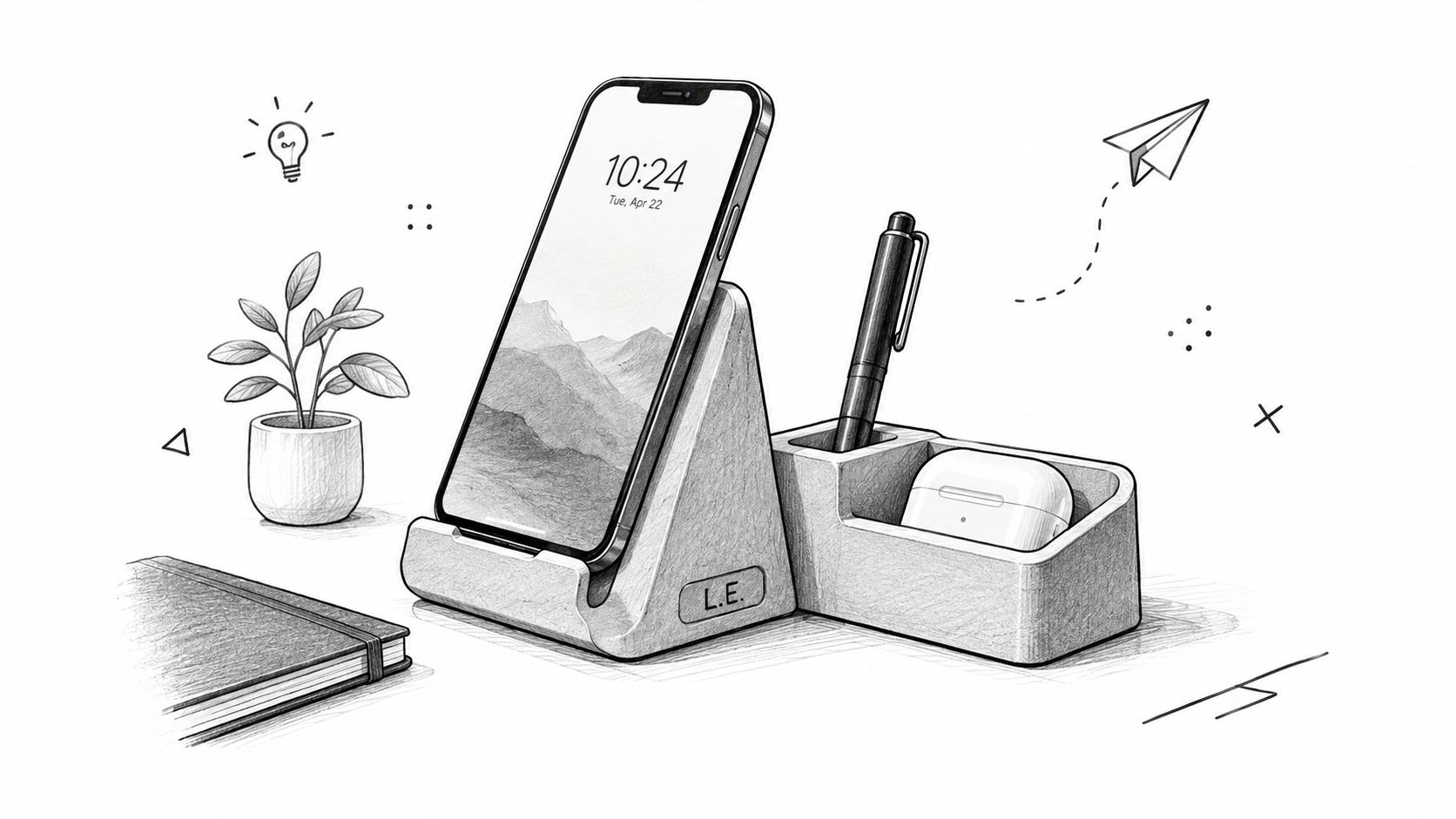
Offer a small colour range rather than every filament you own. Black, white, grey, and a few brighter options can make your product page easier to understand. Personalised names or initials can create a separate premium option, provided your design and production process can handle custom text consistently.
Test the product before buying stock
Print a few samples and photograph each one holding a real phone. Show the charging opening, the viewing angle, and the product next to a familiar desk object so buyers can judge its size.
Use your first orders to learn which version people prefer. Record the colour, design, print time, failed prints, packaging cost, and delivery charge before setting a price. This guide to pricing handmade items can help you account for more than filament alone.
List the stand on your Shopstar store and share it through Instagram, Facebook, and WhatsApp. Add a cable organiser as a related product once customers start asking for a tidier complete desk setup.
2. Plant Pots and Planters with Drainage
Plant lovers often buy with their eyes first, but a beautiful planter still has to work. A 3D-printed pot with no drainage can leave water around the roots and frustrate the buyer. Build drainage into the design from the start, then explain how the pot should be used.
Geometric planters, hanging shapes, and small desk pots can give your store a recognisable style. The print difficulty depends on the shape, wall thickness, size, and whether the planter needs supports. Large pots also use more material and take longer to print, so small and medium designs are usually easier to test.
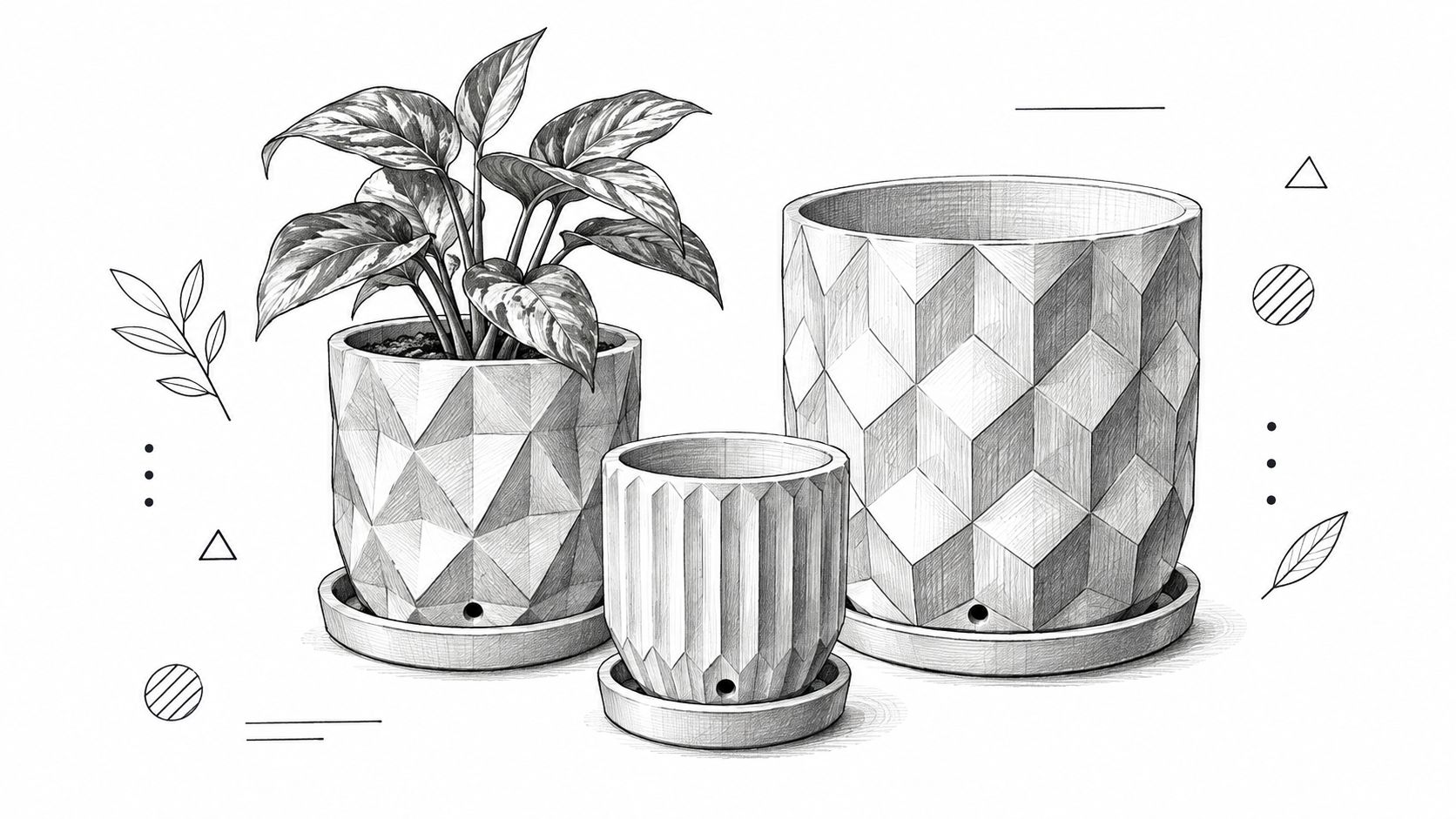
Choose a few signature designs instead of uploading dozens of unrelated shapes. That makes your brand easier to recognise and reduces the number of files, colours, and sizes you need to manage. Photograph every pot with a real plant inside it, because an empty object doesn't show scale or atmosphere.
Sell a plant experience, not only a container
Include simple care information, such as where drainage water should go and how to avoid leaving a plant in standing water. You can also offer bundles for customers who want several pots for a windowsill, shelf, or office.
A bundle can raise the value of each order, but discounting too early can hide a weak margin. Calculate the full cost of filament, failed prints, finishing, packaging, and delivery before offering a multi-item deal.
Reach plant lovers with short videos on Instagram and TikTok. Show the pot being printed, then show the finished item with a plant. A Shopstar store gives you one place to display the designs, accept orders, and direct social-media visitors to the same product pages.
3. Cable Organizers and Cord Management
Cable clutter is an easy problem to demonstrate. A desk covered in charging cables, earphones, and power leads can become a strong before-and-after video when a few clips or a small cable box make the area easier to use.
This product line works well with simple FDM printing. Clips, sleeves, and holders are small, so you can test several designs without using much material. The challenge is making each piece fit the cable properly. A clip that grips too tightly can damage a cable or become annoying to use, while a loose clip won't solve the problem.
Start with neutral colours such as black, white, and grey. They'll suit desks, television units, and office environments better than a large collection of bright colours. You can later add colours for children's rooms, gaming setups, or customers who want a more decorative look.
Turn small parts into a useful kit
A single clip may be difficult to price profitably once packing and delivery are included. A kit containing several matching pieces can give the customer a more complete solution and make the order easier to explain.
Create separate kits for:
- Home desks: Clips for charging cables and computer leads.
- Entertainment units: Holders for television, console, and speaker cables.
- Office setups: Larger packs suited to shared workspaces or small businesses.
- Organised workstations: A cable kit paired with a phone stand or desk tray.
Film a messy desk being organised in a few simple steps. Use Shopstar product options to offer the cable kit as an add-on when someone buys a desk organiser. That cross-sell feels natural because both products address the same workspace problem.
Business customers may also need repeat orders, but don't promise a bulk supply until you've tested print reliability. Print a sample batch first and check that the clips open, close, and hold cables consistently.
4. Jewellery Boxes and Display Organizers
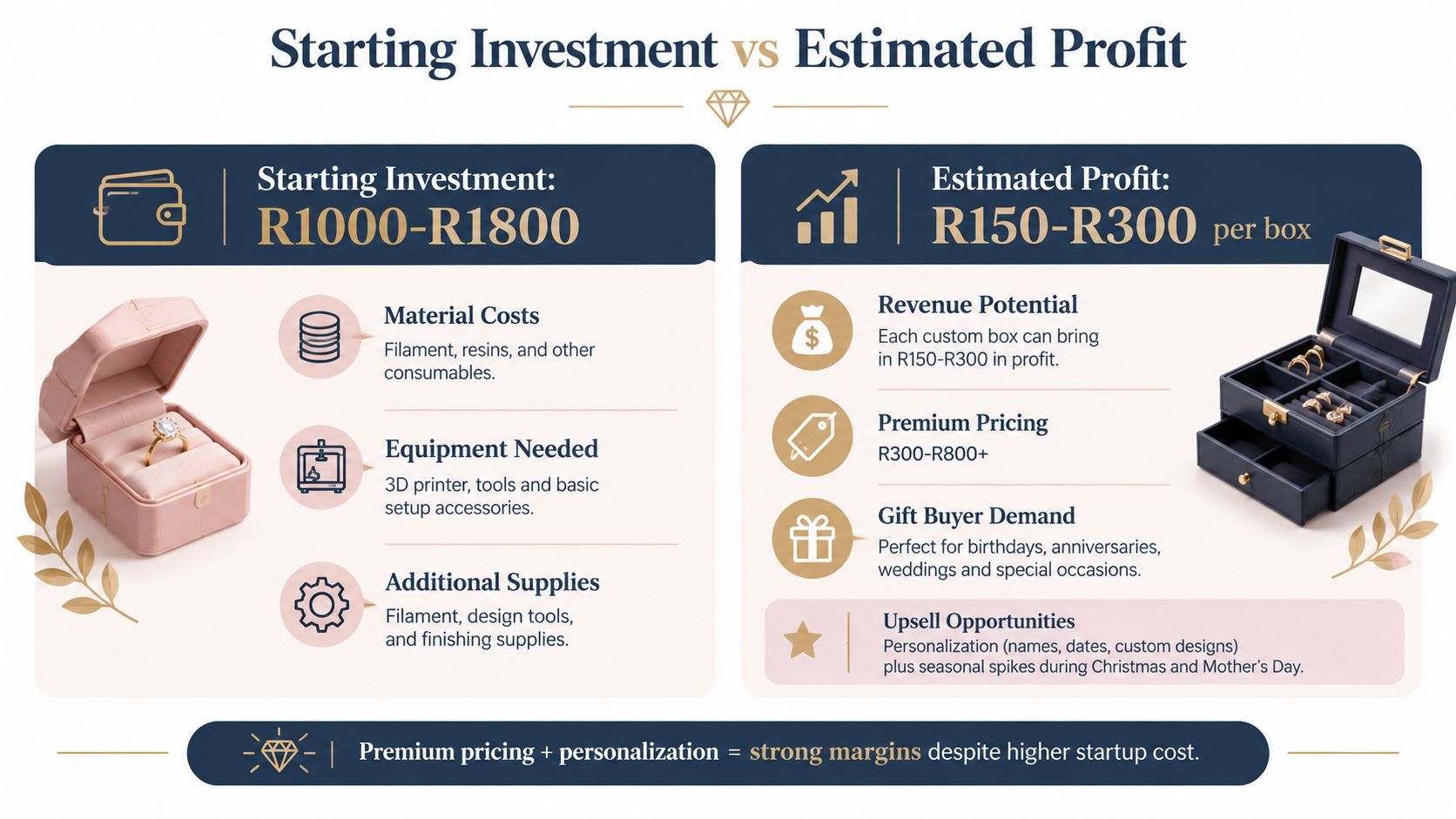
Jewellery storage gives you a chance to sell appearance as well as function. A ring holder, earring stand, necklace organiser, or compact jewellery box can appeal to individual buyers, gift shoppers, and jewellery brands looking for matching packaging or display pieces.
The product needs more care than a basic cable clip. Thin hooks can break, sharp edges can catch fabric, and visible layer lines may make a premium item look unfinished. Test the hinges, compartments, and attachment points before listing them. Adding felt or velvet to the inside can improve the experience, but it also adds labour and packaging decisions.
A strong starting range might include a small ring holder, a compact earring stand, and one necklace organiser. Standard designs help you control production, while custom colours or names provide an upgrade without requiring a completely new model for every customer.
Build a jewellery-focused store
If you already make jewellery, these products can increase the value of each order. A customer buying earrings might also need a display stand. A gift buyer may prefer a coordinated set rather than a loose item in a generic box.
Use polished photographs with jewellery arranged inside the organiser. Show the compartments clearly and include a scale reference. Gift buyers need to understand whether the item suits a dressing table, a travel bag, or a display shelf.
You can use Shopstar's small-batch production guidance when deciding whether to make one custom piece, test a small run, or prepare a repeatable collection. Promote gift sets to wedding parties, bridesmaids, and customers buying for birthdays or anniversaries. Email past buyers when seasonal gifting periods approach, but only send messages to people who've agreed to receive marketing.
5. Cookie Cutters and Baking Tools
Custom cookie cutters can attract home bakers, cake decorators, and small baking businesses that need shapes they can't easily find in ordinary shops. Animals, local themes, names, logos, and seasonal shapes can all work, but the design must produce a clean cut without weak corners or difficult-to-clean recesses.
Food contact makes this a higher-responsibility product than a decorative planter. Don't describe a material as food-safe because it's marketed for general 3D printing. Research the filament, printer surfaces, cleaning process, and intended use carefully before selling anything that touches food. If you can't confidently support the claim, choose a different product category.
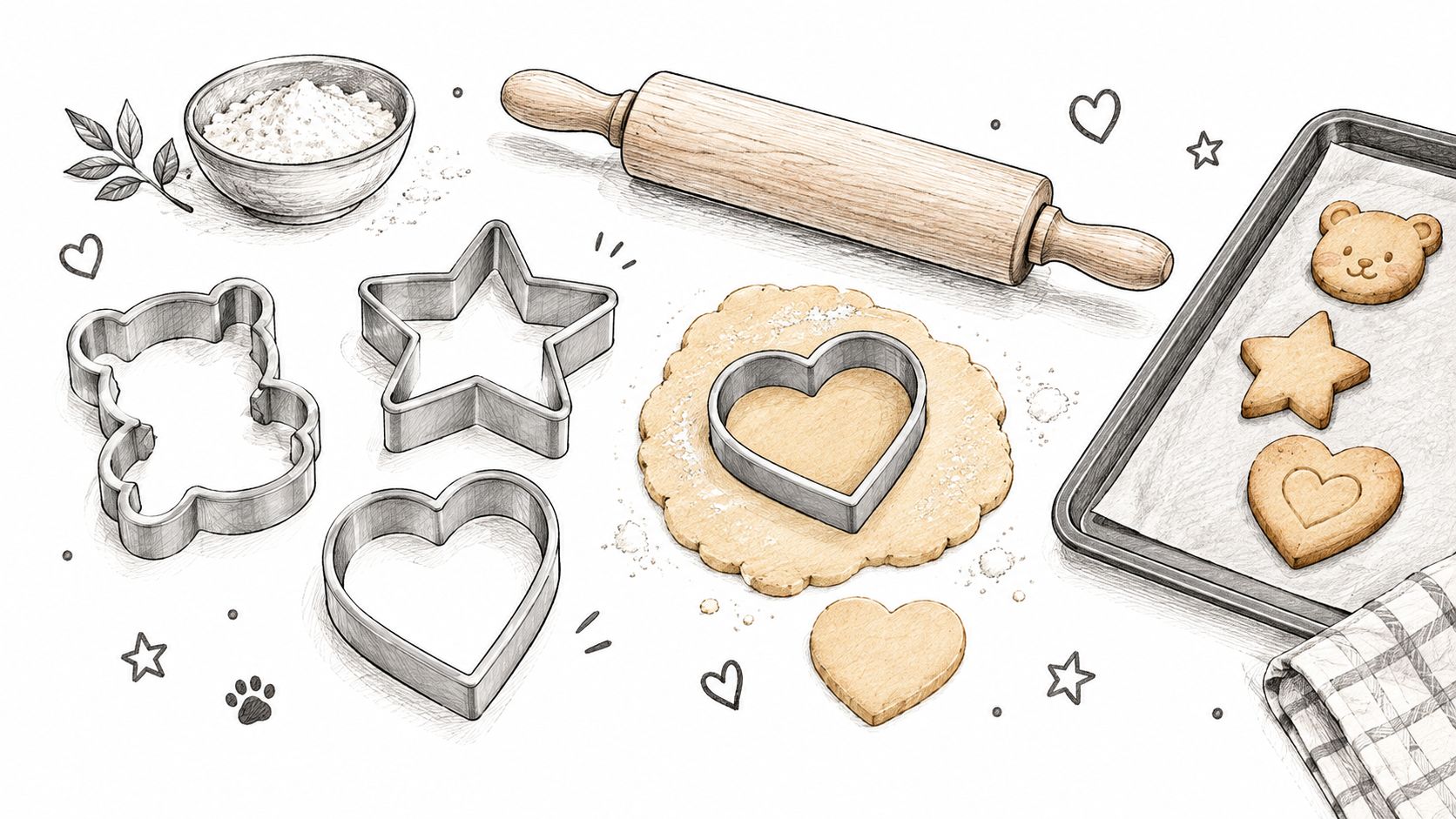
Photograph the cutter in use, not only on a plain background. A picture of the cutter, rolled dough, and finished biscuits tells the buyer exactly what they're purchasing. Explain how to wash and store it, and avoid promising performance you haven't tested.
Use collections to create repeat interest
Seasonal collections can give customers a reason to return, but they also create a timing risk. A design launched too late may miss the customer's baking plans, so prepare samples early and collect interest before printing a large batch.
Offer themed sets, such as African animals, celebration shapes, or festive designs. Custom work can be valuable, but quote it only after checking the customer's artwork, required size, and printability. Some logos and detailed drawings need cleaning up before they can become practical cutters.
Instagram collaborations with bakers can provide useful validation. Ask a local baker to test a sample and show the resulting biscuits, rather than paying for promotion before you know whether the cutter works well.
6. Drawer Dividers and Storage Inserts
Drawer organisers solve a problem that customers can see every day. Kitchens, bathrooms, bedrooms, and home offices all contain drawers that waste space or become difficult to use. Modular dividers and inserts can make the product more useful than a fixed tray because customers can adjust the arrangement.
The main difficulty is fit. A divider that's only slightly too long may not fit at all, while one that's too short can slide around. Give buyers a clear measuring guide and ask for the inside dimensions of the drawer, not the outside dimensions of the cabinet.
Make sizing easy for beginners
Start with standard small, medium, and large options if they fit common drawer layouts. For custom orders, use the order notes on your Shopstar store to collect width, depth, height, and the customer's preferred compartments. Repeat the measurements back to the buyer before printing.
Offer focused kits instead of one confusing catalogue:
- Kitchen kit: Sections for utensils and small tools.
- Make-up kit: Compartments for cosmetics and brushes.
- Office kit: Spaces for pens, cables, notes, and stationery.
- Whole-drawer system: Dividers, inserts, and labels sold together.
The customer should understand what they'll receive from one product image and a short description. Show an empty drawer, the components being arranged, and the finished drawer in use. Ask happy customers for permission to share their organised spaces on social media.
Custom sizing can earn more per order, but it creates more customer-service work and more opportunities for errors. Keep a record of successful measurements and turn popular layouts into standard products.
7. Miniature Figurines and Collectibles
Miniatures work because the customer is buying into a hobby, not just purchasing a small object. Tabletop gamers may want a character for a campaign, collectors may look for a themed display, and model enthusiasts may value detail that isn't available in ordinary shops.
Resin printing can produce fine detail, while FDM printing may be more suitable for larger, less delicate figures or display pieces. Either way, small parts can break during printing, cleaning, painting, or delivery. Your product descriptions should explain whether the figure arrives painted, partly finished, or ready for the buyer to paint.
Copyright and licensing are serious concerns here. Don't copy popular characters or sell files that only allow personal use. Design your own fantasy creatures, animals, and original characters, or use models with clear permission for commercial physical sales.
Sell to a community you understand
Join South African tabletop gaming groups, Facebook communities, and Discord spaces before trying to sell. Pay attention to what players ask for, what sizes fit their games, and which accessories make their sessions easier. A small original collection is safer and easier to brand than a large range based on recognisable characters.
You can sell related products such as display bases, collection boxes, or paint accessories. Painting services may increase the order value, but they also add time and quality-control risk. Offer painted work only after you know how long each finish takes.
Show the printing process and finished models on TikTok or YouTube. Buyers enjoy seeing supports removed, details revealed, and figures placed on a gaming table. This guide to selling handmade products online can help you think through presentation, product information, and online selling basics.
8. Custom Phone Cases and Protective Covers
Phone cases have a large potential audience, but they're less forgiving than a desk accessory. Buyers expect the case to fit buttons, cameras, speakers, charging ports, and wireless charging features correctly. A design that looks good but blocks a port will create returns and unhappy messages.
Start with one or two phone models instead of trying to support every device. The plan notes for this product include iPhone 14 and Samsung S24 as examples, but verify the exact model and dimensions before producing a run. Print test cases, fit them to real phones, and check access to every opening.
Personalisation can separate your case from mass-produced alternatives. Names, initials, dates, patterns, and limited-edition themes give customers a reason to choose your store. They also make mistakes more costly, so confirm spelling and model details before printing.
Prove the fit before promoting durability
Use photographs of the case on the actual phone model. Show the camera opening, side buttons, and charging port. If you claim protection, test the design responsibly and describe what you tested. Don't turn one successful drop into a broad guarantee.
A Shopstar product listing can use variants for phone model, colour, and personalisation. Keep the options limited at launch so customers don't make confusing combinations. A screen-protector bundle may make sense, but calculate the supplier cost, packaging, and delivery before setting a combined price.
This product suits someone comfortable with careful measuring and repeated design adjustments. It isn't the easiest first item, but it can become a strong niche once one model fits reliably.
9. Bathroom and Shower Organizers
Bathroom products need to handle water, cleaning, and daily use. Soap dishes, toothbrush stands, shower caddies, and wall organisers can all work when the design keeps water moving instead of trapping it against the product.
Use sloped surfaces, drainage openings, and rounded areas that are easy to clean. Choose materials based on the environment and the demands of the specific item. Don't describe a product as waterproof unless you've tested the design and material for its intended use.
Different sizes can serve different customers. A small toothbrush stand may suit a family bathroom, while a larger shower caddy needs stronger attachment points and careful packaging. Wall-mounted products also require clear instructions about compatible surfaces and safe installation.
Photograph the daily problem
A clean product photograph matters, but a before-and-after image can communicate the benefit faster. Show a crowded basin, then show toothbrushes or soap arranged in the organiser. Include a maintenance note explaining how the customer should clean the item and reduce moisture build-up.
A complete bathroom bundle can group a toothbrush stand, soap holder, and shower organiser. Bundles may simplify shopping, but they also increase parcel size and delivery costs. Weigh and package a complete sample before publishing the offer.
Accommodation owners may need several matching pieces for guest bathrooms. That can lead to repeat work, but business buyers will expect consistent colour, dimensions, and finish. Print several samples together before offering a larger order.
10. Desk Name Plates and Business Name Signs
Personalised name plates are a straightforward way to sell custom work to entrepreneurs, offices, gift buyers, and small businesses. A desk sign can show a person's name and title, while a larger piece can display a business name or logo on a reception desk, shelf, or office door.
Create a few base templates so customers can choose a style without asking you to design from nothing. Offer finishes such as black, white, wood-look, and metallic colours if your materials can produce them consistently. A limited range is easier to photograph, price, and keep in stock.
Make custom orders easy to approve
Use your Shopstar order form to collect the exact wording, preferred colour, template, and any logo file. Send a proof or written confirmation before printing, especially when the customer provides unusual spelling or a business logo. Your process should prevent a small text error from becoming a full reprint.
A business bundle could combine a name plate with desk accessories, but don't offer a fixed bundle price until you know the print time and packaging requirements. Corporate buyers may place larger orders, while individual gift customers may care more about a quick response and attractive presentation.
Show the sign in a real desk setup. Include a close-up of the lettering and a second image that demonstrates scale. You can offer a rush option only if your printer schedule supports it. If you charge extra for urgent work, state the conditions clearly before payment.
Ask permission before sharing customer names, logos, or office photographs. A collection of real customer signs can build trust, but privacy matters more than content.
10 3D-Printed Products Comparison
| Item | 🔄 Implementation complexity | ⚡ Resources & time | 📊 Expected outcomes | 💡 Ideal use cases | ⭐ Key advantages |
|---|---|---|---|---|---|
| Custom Phone Stands and Desk Organizers | Low, simple shapes, easy to iterate | Low material; 2–4 hrs print; start R800–R1500 ⚡ | Modest margin R100–R200/unit; steady demand 📊 | Students, office workers, gift shops 💡 | Easy to produce and ship; customizable; beginner‑friendly ⭐ |
| Plant Pots and Planters with Drainage | Moderate, must design drainage and sizes 🔄 | Medium material; larger prints; start R1200–R2000; higher shipping ⚡ | Good margin R150–R300/pot; seasonal spikes (spring/summer) 📊 | Indoor plant lovers, Instagram sellers, gift bundles 💡 | Instagram‑friendly designs; premium pricing; bundle potential ⭐ |
| Cable Organizers and Cord Management | Low, simple clips and holders 🔄 | Very low material cost (R30–R50); 1–2 hrs print; start R600–R1000 ⚡ | Low per‑unit profit R30–R100; needs volume/bulk orders 📊 | Offices, schools, tech accessory retailers 💡 | Fast production; solves universal problem; cheap to produce ⭐ |
| Jewelry Boxes and Display Organizers | Moderate–High, compartments and finishing required 🔄 | Medium resources; finishing materials (felt/velvet); start R1000–R1800 ⚡ | Higher price R300–R800+; profit R150–R300; seasonal demand 📊 | Gift buyers, jewelry sellers, wedding markets 💡 | Premium pricing; personalization & upsells; high perceived value ⭐ |
| Cookie Cutters and Baking Tools | Low–Moderate, food‑safe requirements and sharp edges 🔄 | Low material; 30–60 min print; use food‑safe filament; start R1000–R1500 ⚡ | Moderate margins R50–R150 each, R200–R400 per set; strong seasonality 📊 | Home bakers, bakeries, seasonal gift sets 💡 | Unique/custom shapes; quick prints; strong seasonal demand ⭐ |
| Drawer Dividers and Storage Inserts | Moderate, modular fit and accurate sizing 🔄 | Medium material; start R800–R1200; can be bulky to ship ⚡ | Profit R100–R200/set; high repeat purchase potential 📊 | Home organizers, interior designers, kitchen/office drawers 💡 | Solves universal clutter problem; modular/expandable system ⭐ |
| Miniature Figurines and Collectibles | High, detailed modeling and post‑processing 🔄 | Higher investment; 1–8 hrs print; start R1500–R2500; painting optional ⚡ | High margin potential R200–R1000+; niche, passionate buyers 📊 | Tabletop gamers, collectors, custom commissions 💡 | High detail and premium pricing; add‑on painting/services ⭐ |
| Custom Phone Cases and Protective Covers | Moderate–High, model‑specific fit required 🔄 | Medium material; 2–4 hrs print; start R1000–R1800 ⚡ | Profit R75–R150/case; huge market but highly competitive 📊 | Phone accessory buyers, personalization seekers 💡 | Large market and easy personalization; stacks well for inventory ⭐ |
| Bathroom and Shower Organizers | Moderate, drainage and moisture resistance important 🔄 | Medium material; waterproof filament recommended; start R900–R1500; bulky shipping ⚡ | Profit R100–R250/piece; repeat purchases and bulk sales possible 📊 | Families, accommodations, bathrooms needing organization 💡 | Practical daily use; visible product placement; bundle options ⭐ |
| Desk Name Plates and Business Name Signs | Low–Moderate, per‑order customization required 🔄 | Low material; 1–3 hrs print; start R700–R1200 ⚡ | Profit R150–R300/nameplate; corporate bulk opportunities 📊 | Offices, corporate gifts, entrepreneurs 💡 | High perceived value; personalization and corporate orders ⭐ |
Choose One Idea and Make Your First Sale
The best product isn't necessarily the most impressive thing your printer can make. Choose the idea that matches your current equipment, your patience for testing, and the customers you can reach without spending heavily on promotion.
If your printer handles simple FDM parts reliably, start with a phone stand, cable organiser, plant pot, or drawer divider. These products can be tested with a small number of designs and don't require detailed painting. If you're comfortable with careful fitting, phone cases offer more customisation but create more returns risk. If you enjoy detailed finishing, miniatures may suit you, but painting and licensing add complexity. If you already know bakers, plant lovers, jewellery makers, or small businesses, that existing access may matter more than the product category itself.
South Africa has a growing additive manufacturing ecosystem. The local base had reached an estimated 3,500 machines by November 2015, with 87% described as entry-level units, according to 6Wresearch's South African 3D printing market overview. Later academic projections cited in the same overview estimated roughly 9,652 machines by 2025 and 12,923 by 2030, both projections rather than confirmed present-day counts. That history supports a practical approach for beginners. Products designed for accessible desktop workflows can be easier to repeat than items requiring industrial equipment or extensive finishing.
The wider market outlook is also encouraging, but you still need to prove your own product. A South African market forecast projects a 15.2% CAGR from 2024 to 2030 for the country's 3D printing market. The same source gives the South African 3D printing metals segment an estimated value of USD 17.7 million in 2025 and USD 47.85 million by 2030, with a 22.0% CAGR. Those figures describe market momentum, not a guarantee that any particular planter, case, or organiser will sell.
Follow a small launch sequence
- Select one niche: Choose one customer group and one clear product problem.
- Print samples: Make enough versions to check fit, strength, appearance, and repeatability.
- Calculate the full price: Include material, failed prints, machine time, labour, finishing, packaging, payment costs, and delivery.
- Photograph the product in use: Show scale, important features, colour options, and any care instructions.
- Publish a simple Shopstar store: Add clear product details, personalisation instructions, delivery information, and realistic production times.
- Promote where customers already spend time: Share demonstrations through Instagram, Facebook, WhatsApp, or a relevant marketplace.
- Collect feedback: Ask what customers liked, what confused them, and what they'd change.
- Add related products carefully: Expand only after the first offer prints reliably and customers understand its value.
Your online store also needs accurate business and customer information. South African e-commerce sellers must follow the Consumer Protection Act and the Electronic Communications and Transactions Act. Statistics South Africa's consumer guidance says buyers must have an opportunity to review a transaction, correct mistakes, and withdraw before completing an order. It also describes a seven-day cooling-off period after receiving goods, subject to the applicable rules.
Store information matters too. A South African e-commerce consumer guide states that online retailers should display the seller's full name, physical address, product or service description, price, and agreement terms. The source also explains that missing required information can allow cancellation within 14 days under section 43 of the Electronic Communications and Transactions Act, alongside the separate seven-day cancellation right under section 44. Use plain language on your product pages and checkout, and get professional advice if you're unsure how the rules apply to your business.
Batch size should guide your decisions. One South African service provider describes 1 to 5 units as prototypes or one-offs, 5 to 25 units as pilot runs and fixtures or jigs, and 25 to 200 or more units as low-volume production where per-part costs can improve. Read ProtoMech's small-batch production information when deciding whether your idea is suitable for custom orders or repeat batches. A product that looks profitable as one sample may become much more practical when the design is stable and the printer can repeat it with little post-processing.
You don't need a perfect product range. Launch one useful product, make it consistently, and let real customer questions shape what you add next.
Choose your first product this week. Print the sample, photograph it in a real South African home or workspace, write down every cost, and show it to potential buyers before ordering large material supplies.
Shopstar gives South African makers a no-code store builder with local payments, shipping, orders, inventory, analytics, and social-selling options for Instagram, Facebook, Google, and WhatsApp. Set up your first 3D-printed product and invite customers to shop through Shopstar, then use their feedback to build a focused range.


