At the start of 2025, South Africa had 26.7 million active social media user identities aged 18 and above, and social selling means using those platforms and direct messages to find, connect with, and sell directly to customers. It isn't just posting an advert. It's helping a real person move from “How much is this?” to a confident purchase through a conversation.
You might be making beaded earrings in your spare room when a customer sends a WhatsApp message asking whether you can change the colour. Or perhaps someone comments on an Instagram post about a handmade mug, then disappears before you can explain delivery. These small interactions are where many South African online businesses begin.
Social selling gives those conversations structure. You show what you make, answer questions, build trust, recommend the right product, and guide the customer to payment. The process feels more like helping someone choose at a market stall than shouting an advertisement at a crowd.
Table of Contents
- Understanding Social Selling for Your Online Store
- Social Selling Versus Social Media Marketing
- Why South African Shoppers Prefer Chat and Social
- A Simple Framework to Start Selling on Social
- Do You Still Need a Website for Social Selling
- Common Social Selling Mistakes to Avoid
- How Shopstar Simplifies Your Social Selling Journey
Understanding Social Selling for Your Online Store
Imagine a customer sees your custom jewellery on Instagram. She likes the design but wants a gold finish, asks whether it will fit a particular outfit, and needs to know how quickly you can deliver to Durban. A social media post can attract her attention, but the sale happens when you answer those questions clearly and make the next step simple.
Social selling is the use of social platforms and direct messaging to build relationships and sell products. Instagram, Facebook and WhatsApp become places where customers discover your work, ask for advice, receive support and complete a purchase. You aren't only broadcasting a product announcement. You're taking part in the buying decision.
A profile on its own isn't social selling. A beautiful feed may help people notice your jewellery brand, but it won't answer a customer's question about sizing or payment. Social selling starts when you listen and respond.
The shift from posting to helping
A useful way to think about the difference is this:
- Posting: You share a photograph of a new necklace.
- Engaging: Someone comments that the necklace is beautiful, and you reply warmly.
- Selling socially: You ask what style they usually wear, explain the chain length, share the product link, and remain available if they need help checking out.
That approach isn't pushy. It respects the fact that handmade products often need explanation. A customer may want to know where materials come from, whether an item can be adjusted, or how a fragile ceramic piece will be packed.
Practical rule: Treat every enquiry as a request for guidance, not an invitation to pressure someone.
Chat-based selling also creates practical work. You need to track which items are available, which orders have been paid, and which customers still need a reply. If messages arrive through several channels, learning how to boost efficiency with order software can help you organise the back office while keeping your customer conversations personal.
For a maker, social selling is therefore an assisted buying journey. Your craft creates interest, your conversation removes uncertainty, and a clear checkout turns interest into an order.
Social Selling Versus Social Media Marketing
Social media marketing and social selling work together, but they aren't the same job. Think of social media marketing as standing on a stage with a megaphone, while social selling is walking through the crowd, greeting people and having useful conversations.
Marketing helps more people notice your brand. You might publish a reel showing how you shape a clay cup, promote a seasonal collection, or share a customer photograph. The message goes out to many people at once, and the main aim is awareness, interest or visits to your store. You can learn more about the broader discipline in this guide to what social media marketing means.
Social selling happens closer to the individual buyer. It includes replying to a comment, answering a WhatsApp question, recommending a gift set, or following up after somebody asks about a custom order. The purpose is to understand what the person needs and help them decide.
How the two approaches support each other
A jewellery maker might use marketing to announce a new birthstone collection. A short video introduces the designs, a photograph shows the available colours, and a link takes interested people to the online shop. That activity creates attention.
When someone asks, “Can you make this for a teenager?” social selling begins. You can explain the sizing options, suggest a safer fastening, confirm the price, and send the correct checkout link. The public content brings the person closer, while the private conversation helps them buy.
Marketing doesn't replace conversation, and conversation doesn't replace visibility. If you only market, customers may see your products but struggle to get answers. If you only sell through private messages, new people may never discover your brand.
Where to spend your limited time
A small business owner doesn't need to create content all day. Use marketing content to answer common questions before they reach your inbox. Show prices where possible, demonstrate scale, explain delivery areas and photograph products in real settings.
Then protect time for the conversations that show buying interest. A thoughtful reply to a potential customer can be more useful than another rushed promotional post. Keep saved replies for routine questions, but personalise the parts that matter, such as colour, sizing, delivery and gifting.
The best balance is simple: use marketing to attract attention, then use social selling to reduce doubt and complete the sale.
Why South African Shoppers Prefer Chat and Social
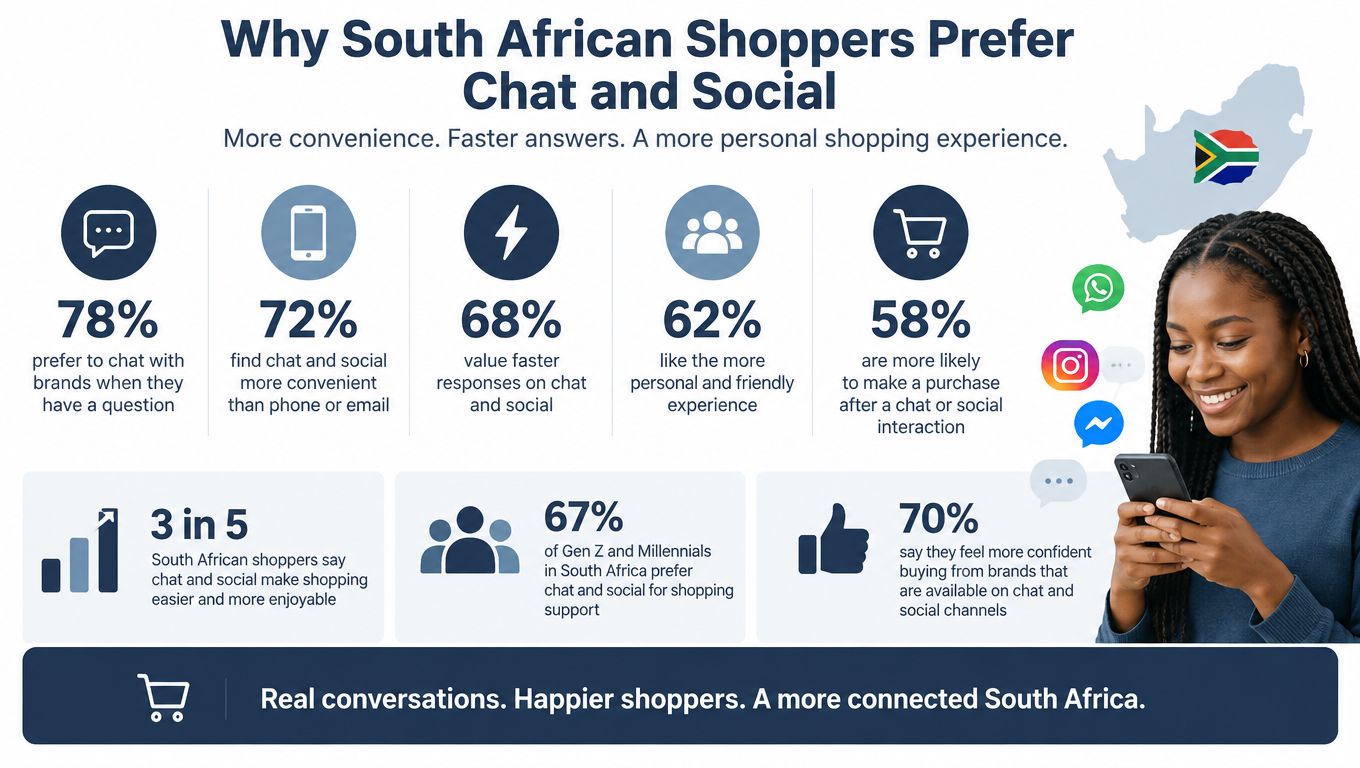
A customer sees your handmade earrings in an Instagram post, asks whether they suit a gift, and moves to WhatsApp to discuss colour and delivery. For a South African micro-business, that familiar chat can become the shop counter, product guide and checkout assistant in one buying journey.
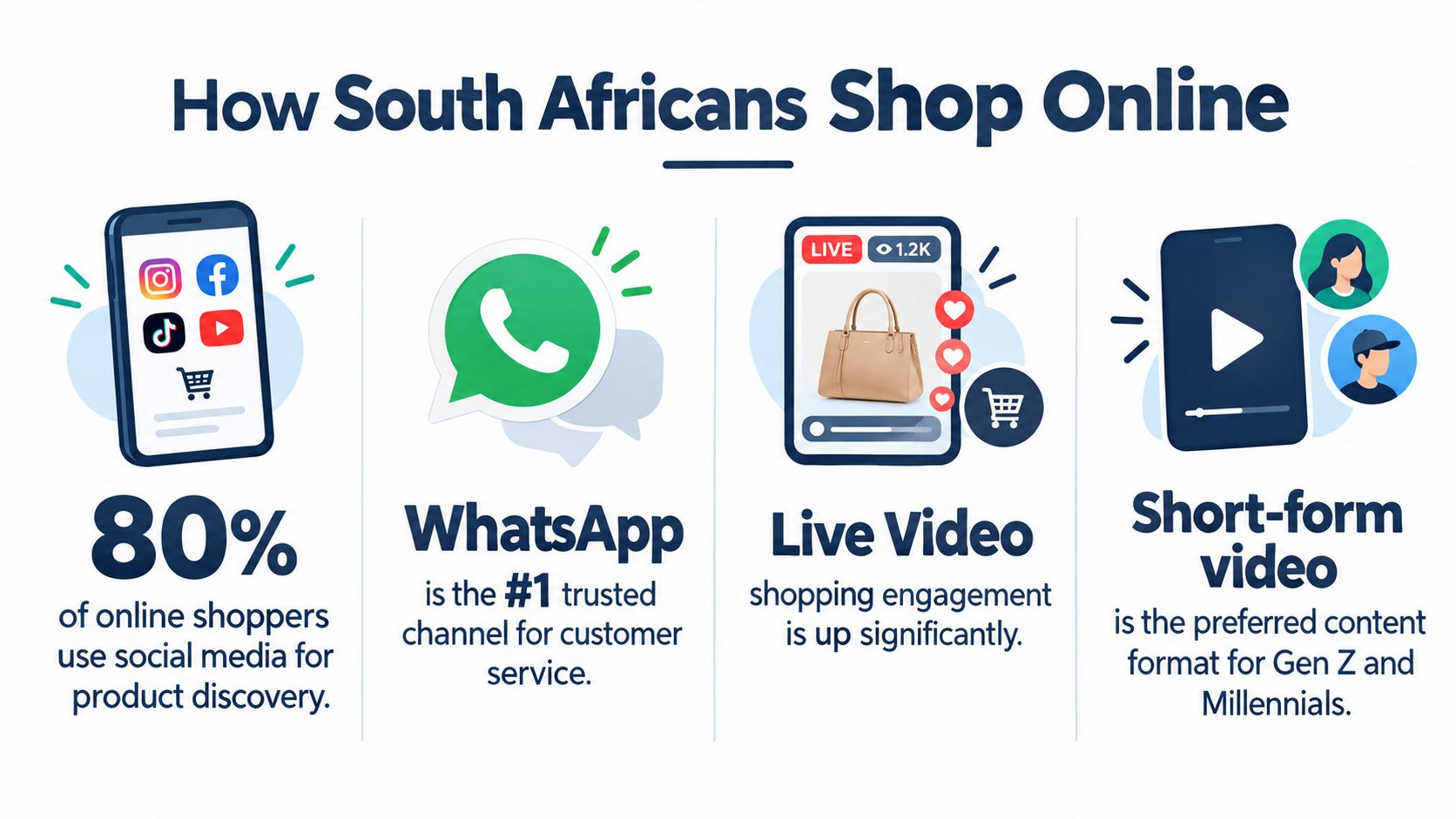
South Africans already spend substantial time on social platforms. At the start of 2025, users spent an average of 3 hours 36 minutes per day on social media, and 63% actively sought brand content, according to South African social media data from Meltwater. A maker can meet potential customers where they are already browsing, asking questions and sharing recommendations.
Platform reach supports a WhatsApp-first approach. Among active users, WhatsApp reached 93.8%, Facebook 88.6%, TikTok 76.9% and Instagram 71.4%. A product demonstration may attract attention on TikTok, a photograph may help someone compare styles on Instagram, and WhatsApp can handle the personal questions that come before payment.
Why conversation reduces buying hesitation
Handmade products often need explanation beyond a photograph. Is the ring adjustable? Can the fabric be washed? Will the mug arrive safely? Can you make matching pieces for a wedding party?
WhatsApp lets customers describe their needs in ordinary language. You can respond with a close-up photograph, voice note, catalogue item or payment link, without sending the person through a complicated buying process. South African market coverage reports that social selling accounts for 10% of ecommerce sales, with purchases taking place through Instagram, Facebook Shops and WhatsApp, as reported by Ecommerce.co.za.
The same report valued South Africa's social commerce market at about US$1.14 billion in 2024 and projected it to reach US$1.54 billion in 2025, a 35.2% year-on-year increase. The figures point to a change in customer behaviour. Social platforms now support buying conversations, not only advertising.
Social proof matters
Customers judge the buying experience as well as the product. They notice whether you answer clearly, show genuine images, explain delivery and share feedback from previous buyers. South African consumer insights found that 42% had purchased a product after seeing a promotion on social media, while 46% trusted influencer-endorsed products, according to Bizcommunity's report on social commerce.
That influence does not require a celebrity. A local stylist, satisfied customer or small creator can show how your product looks and works in daily life. Their example gives a shopper useful context, while your chat provides the reassurance needed to place an order.
A Simple Framework to Start Selling on Social
You don't need a large team or a complicated sales department. Start with four actions that turn attention into a managed buying journey.
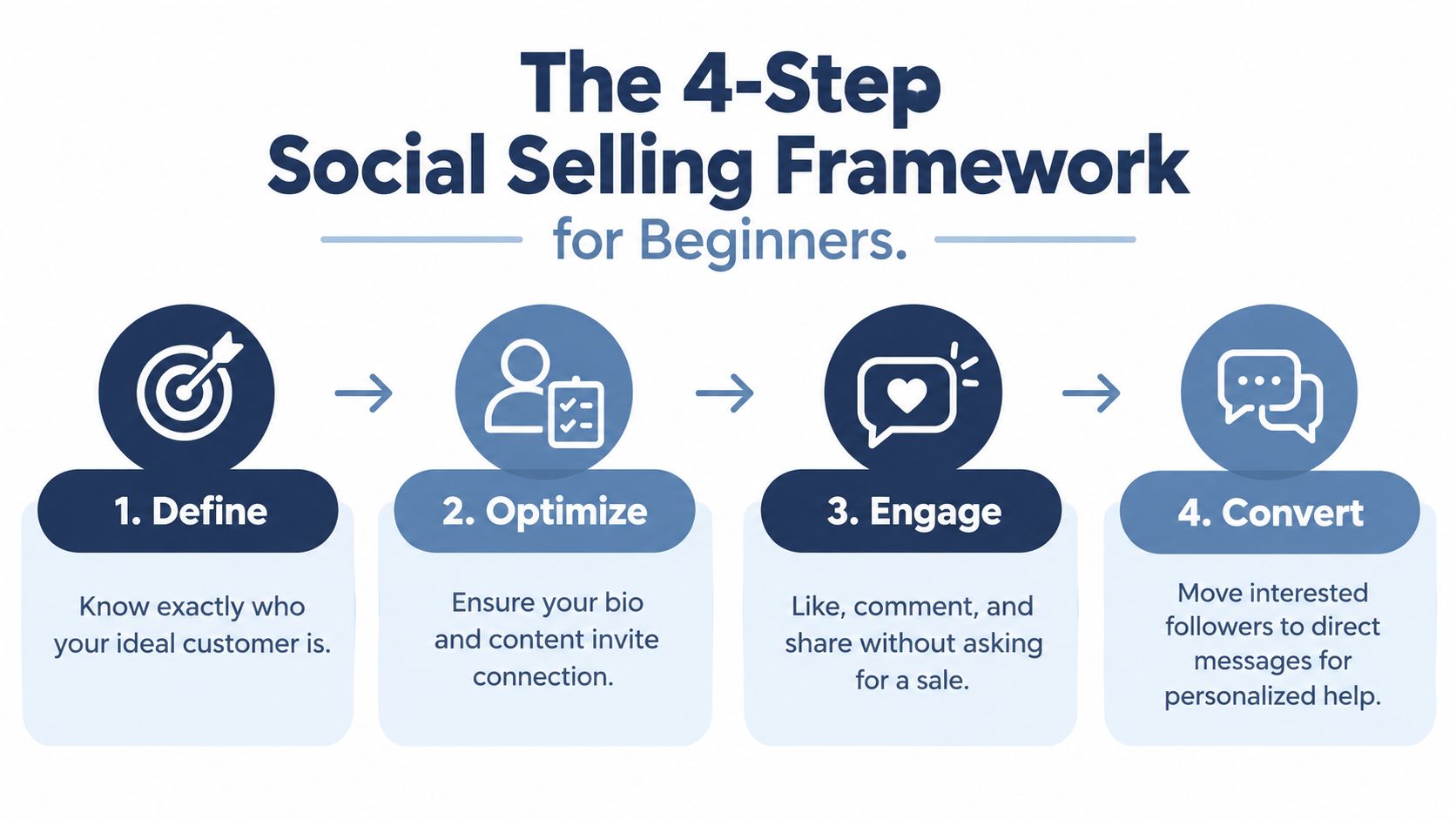
1. Define who you're helping
Begin with one clear customer group. A jewellery maker might serve people looking for personalised birthday gifts, rather than trying to sell every style to everyone. A ceramicist might focus on customers who want colourful, locally made kitchenware.
Write down what this person cares about:
- Product need: What problem or occasion brings them to you?
- Buying concern: Are they worried about price, durability, delivery or fit?
- Useful content: Would they prefer styling ideas, care instructions or making videos?
- Best channel: Are they more likely to ask questions on WhatsApp, Instagram or Facebook?
A clear customer makes content and replies easier. You can use the language they use instead of describing your products with vague phrases such as “premium lifestyle solution”.
2. Optimise your profile
Your profile is a small storefront. Someone should understand what you sell and how to buy without searching through dozens of posts.
Include your product category, location, ordering method and a direct store link. Use a profile photograph or logo that matches your packaging, and pin posts that show bestsellers, delivery information and frequently asked questions.
Your content should demonstrate the product, not only display it. Show a bracelet on a wrist, a mug beside a cup of tea, or a sewing process from fabric to finished item. Behind-the-scenes content gives customers reasons to start a conversation.
3. Engage before you pitch
Reply to comments with useful information. Ask a genuine question when somebody shares a relevant post. Show interest in the communities where your customers already participate.
Engagement isn't a trick for forcing a sale. It helps people recognise your name and understand your work. When someone responds to a story with “I love this colour,” you can ask whether they're choosing a gift or looking for something for themselves. That answer tells you how to help next.
Here is a useful reply pattern:
- Acknowledge what they said.
- Ask one relevant question.
- Give a clear recommendation.
- Offer the next step.
For example: “Thank you, that shade is one of our popular choices. Is the bracelet for everyday wear or a special occasion? We have a shorter option for a neater fit. I can send you the product link if you'd like to check the details.”
4. Convert the conversation
The handoff to payment should feel like a natural part of the help you provide. Once the customer has chosen an item, confirm the product, price, delivery details and expected fulfilment time. Then send a secure payment or checkout link.
Don't leave the customer to guess what happens next. A clear message might say: “I've reserved the blue bead bracelet for you. You can complete payment through this link, and I'll confirm the order once payment comes through.”
Keep the conversation and order record connected. If you write everything in scattered notes, you may miss a payment or promise an item that another customer has already bought.
The framework is repeatable: define the customer, optimise the profile, engage helpfully, then convert with a clear checkout. It works for a small jewellery brand, a clothing label, a food business or a handmade homeware shop.
Do You Still Need a Website for Social Selling
Social selling doesn't mean you should abandon your website. Social platforms are excellent for discovery and conversation, but an online store gives customers a stable place to review products, check details and complete an order when you're not available.
A website also gives you more control. Your product names, prices, stock information, delivery terms and returns policy can live in one place. If a customer finds an old Instagram post months later, the link can still lead to the current product page instead of starting another round of questions.
What belongs in social apps
Use social channels for the parts of the journey that benefit from human interaction:
- Discovery: Show new designs, making processes and styling ideas.
- Trust: Share customer feedback, demonstrations and your face behind the brand.
- Questions: Help buyers decide on size, colour, fit, care or gifting.
- Follow-up: Continue a conversation after someone has shown interest.
These activities help the customer feel supported. They also let you learn which questions come up most often, so you can improve your product pages and FAQs.
What belongs in your online store
Use your website for the parts that need consistency and accuracy:
- Product information: Keep descriptions, photographs and options together.
- Stock control: Show what is available and reduce the risk of selling an item twice.
- Checkout: Give customers a clear, secure path to payment.
- Order records: Keep paid orders, delivery information and customer details organised.
A website doesn't have to be elaborate. A focused store with strong product photographs, clear pricing and local delivery information can support a much larger social presence. For a closer look at the relationship between social channels and an owned store, read whether you can sell on Instagram without a website.
The local market supports this combined approach. South African SMME reporting shows website use reached 81.3% in 2025, while social media use was also widespread, according to South African social commerce coverage. The practical lesson is not “choose social media or a website”. It is use social media to start the relationship and your store to manage the purchase.
Common Social Selling Mistakes to Avoid
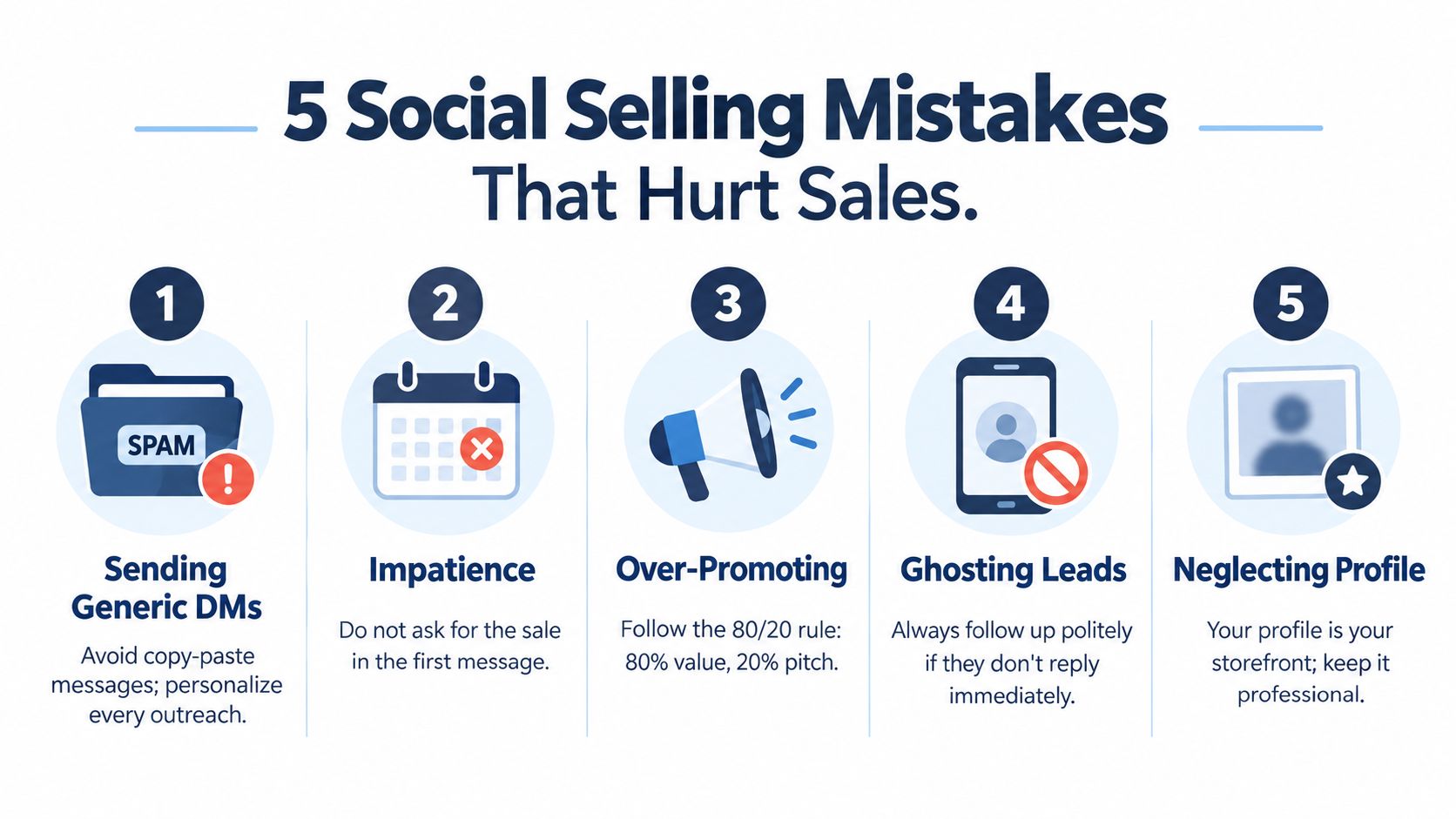
A friendly conversation can become exhausting when every enquiry requires the same manual work. The problem usually isn't social selling itself. It's the absence of clear boundaries and a reliable process.
Slow replies and forgotten leads
A customer who asks about delivery may be comparing several businesses. If your reply arrives much later, they may have already bought elsewhere. You don't need to be online all day, but you should set expectations with an automatic greeting and business hours.
Use saved replies for questions about delivery areas, payment methods and product care. Personalise the opening and any recommendation. A saved answer should reduce typing, not make the customer feel ignored.
Manual payment instructions
Sending bank details in a long message can create confusion. The customer may use the wrong reference, forget to send proof of payment or worry about whether the order is genuine.
A secure checkout link gives both sides a clearer record. It also reduces the amount of sensitive payment information you need to exchange in chat. Confirm the order only after your payment system records the transaction.
Pushing too early
A person who comments on a necklace may be admiring the design, not ready to buy. A generic message such as “Buy now, limited offer” can feel intrusive, especially when you haven't learned what they need.
Answer the question first. If the customer wants more information, offer it. When buying intent becomes clear, explain the next step without creating artificial pressure.
Losing track of stock
Social conversations often happen alongside sales from markets, pop-ups and your website. Without one stock record, you can promise the same handmade item to two people.
Update availability after each sale, and tell customers when an item is made to order. Honest timing protects trust better than promising immediate dispatch and apologising later.
Being available every hour
Your business needs boundaries. Add your normal reply times to your WhatsApp profile, prepare an away message, and decide which enquiries require an immediate answer. A sustainable system lets you serve customers properly without turning every notification into an emergency.
A healthy social-selling routine includes both fast help and protected making time.
How Shopstar Simplifies Your Social Selling Journey
A chat-based sale still needs somewhere to go. Once several customers ask about different products, you need accurate stock, payment confirmation, delivery details and an order record. Managing those pieces across WhatsApp, Instagram, Facebook and separate spreadsheets can create double bookings and missed follow-ups.
A platform such as Shopstar can connect the customer-facing conversation with the store operations behind it. Shopstar is a South African ecommerce platform with a no-code, drag-and-drop store builder, local payment options, shipping, orders, inventory and analytics in one dashboard. That means you can share a product page in a WhatsApp reply instead of typing the same price and delivery explanation each time.
Keep the handoff simple
Suppose somebody messages about a pair of earrings. You can answer the style question in WhatsApp, send the relevant store link, and let the customer review the product information and complete checkout. The order then has a clearer home than a message thread alone.
This also helps when customers arrive through different routes. A person may discover a product on Instagram, ask about it on WhatsApp and finish payment through your online store. The channels serve different purposes, but the product and order information can remain connected.
For practical ideas on planning this process, use this social selling strategy for an online store as a starting point. Focus on the routine you can maintain: publish useful product content, answer questions during set hours, send clear links, and keep stock updated.
Spend your energy where it matters
Software shouldn't replace the personal part of your business. Your knowledge of materials, colour matching, sizing and care is what makes a maker's conversation valuable. The right store tools handle repetitive administration so you can spend more time creating products and helping customers choose.
Start small. Choose one main social channel, set up a clear profile, prepare answers to common questions, and connect each product conversation to a checkout. Then review which questions customers ask and improve your product pages over time.
Shopstar gives South African makers a no-code online store with local payments, shipping, inventory, orders and social selling links in one place. Visit Shopstar to start your store with a 14-day free trial and turn your next WhatsApp or Instagram enquiry into a simpler, more organised sale.