Selling Wood Crafts Online in South Africa Made Simple
September 19, 2026 · 19 min read · Dylan Klichowicz
You've probably already done the hard part. You've made a few beautiful pieces, friends have said “you should sell these”, and now your dining table or garage bench is full of chopping boards, shelves, trays, or carved décor that need buyers.
The part that stops many isn't the making. It's the online side. Photos, prices, courier quotes, WhatsApp messages at odd hours, custom requests that all sound slightly different, and the fear of putting a store live before everything feels perfect.
That's normal.
Selling wood crafts online in South Africa works best when you keep it simple and stay organised from the start. You don't need a huge range. You don't need polished business language. You need a small set of products people can understand, a price that pays you properly, clear lead times, and one clean system for taking and tracking orders.
Table of Contents
- Why Selling Wood Crafts Online Works in South Africa Right Now
- Getting Your Wood Crafts Ready to Sell Online
- Launching Your Online Store With Local Payments and Shipping
- Pricing Your Crafts and Sorting Legal Basics Simply
- Finding Customers and Growing Sales Without the Chaos
- Your Next Steps to Start Selling With Confidence
Why Selling Wood Crafts Online Works in South Africa Right Now
A lot of South African makers still think online selling is only for clothing, gadgets, or big brands. It isn't. Buyers are already comfortable ordering physical products online, and that matters for handmade wooden goods because these are the kinds of items people often discover while scrolling on their phones, then buy as gifts, home upgrades, or custom pieces.
South Africa's online retail market has grown strongly. Income from e-commerce sales of goods and services rose from R37.4 billion in 2018 to R86.8 billion in 2022, which reflects 23.4% annual growth in that period, according to South Africa's online retail market reporting. The same report says online retail reached about R96 billion in 2024 and is projected to exceed R130 billion in 2025, with online retail approaching 10% of total national retail sales.
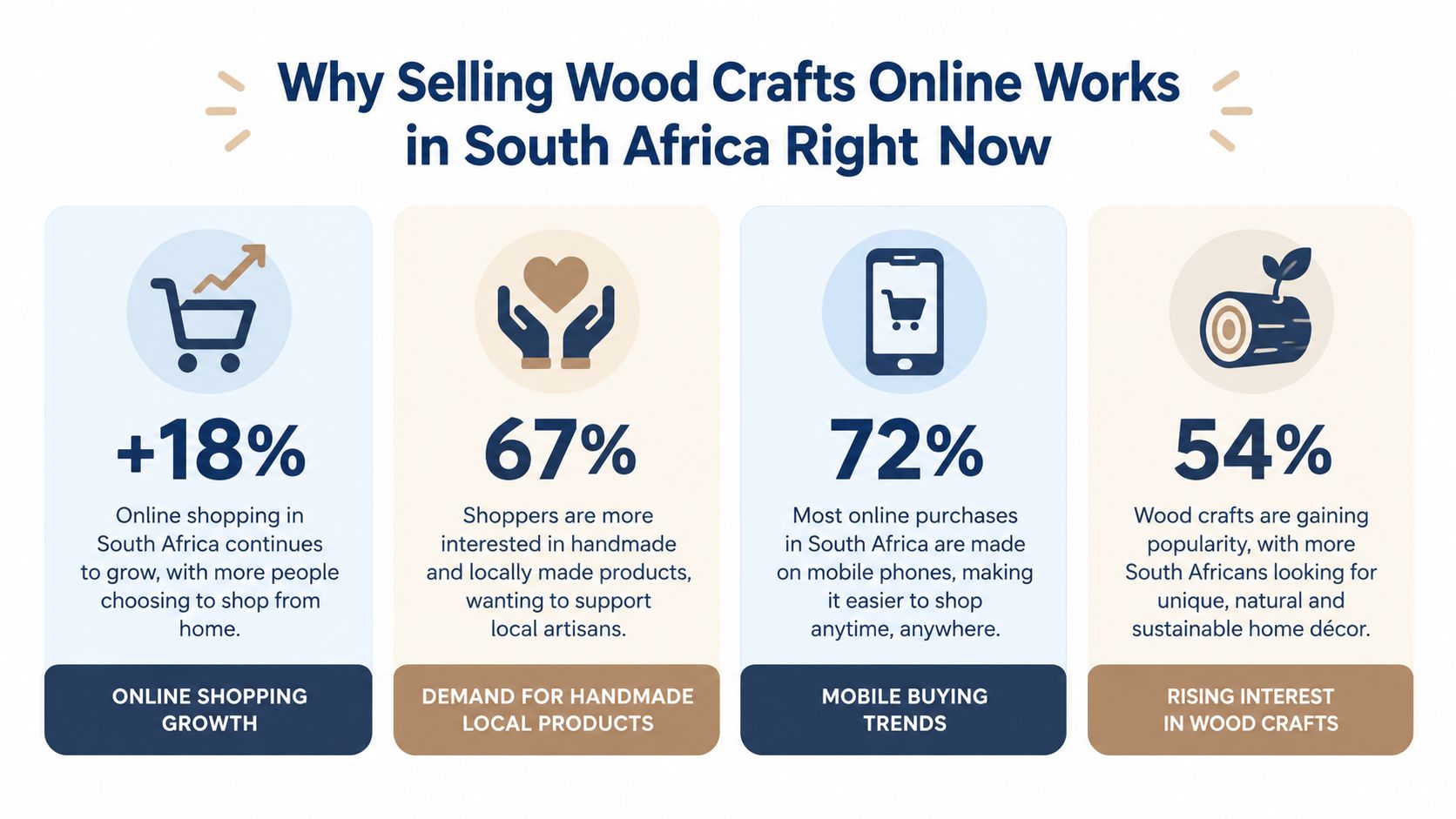
What this means for a wood crafter
If you make serving boards, planters, toy boxes, floating shelves, signs, or small furniture, you're not trying to convince people to trust online shopping from scratch. That trust already exists. Your job is simpler than that. You need to help people understand what you make, what size it is, what it costs, how long it takes, and how it will arrive.
A beginner usually does better with products that are:
- Easy to explain. A wall shelf in one size is easier to sell than a fully custom built-in unit.
- Easy to photograph. Simple forms with clean edges usually look stronger online.
- Easy to repeat. If you can make it again without redesigning it each time, you'll stay sane.
- Easy to ship. Smaller, sturdier pieces help you learn faster.
Online buyers aren't all looking for the same thing
Some want a quick gift. Some want a custom family name sign. Some want matching kitchen items. Some are buying for a new home and need practical pieces with a handmade feel.
That's why a wood craft business usually grows better when you start with a narrow offer. One maker might begin with bread boards and serving trays. Another might focus on nursery shelves and toy storage. A third might sell small carved décor that's light enough to courier easily.
Practical rule: Start with pieces you can make twice in the same week without hating the process.
There's also a clear sign that local buying habits support new online stores. A South African consumer report for 2026 found that 62.5% of online shoppers say they shop online as much as or more often than in physical stores, while 2.2% say they shop almost exclusively in physical stores. That doesn't mean every product will sell. It does mean your customer is already online.
Getting Your Wood Crafts Ready to Sell Online
Before you build a store, fix your product list. Most beginners save or lose time here. If your products are unclear, your store will feel messy no matter how nice the template looks.
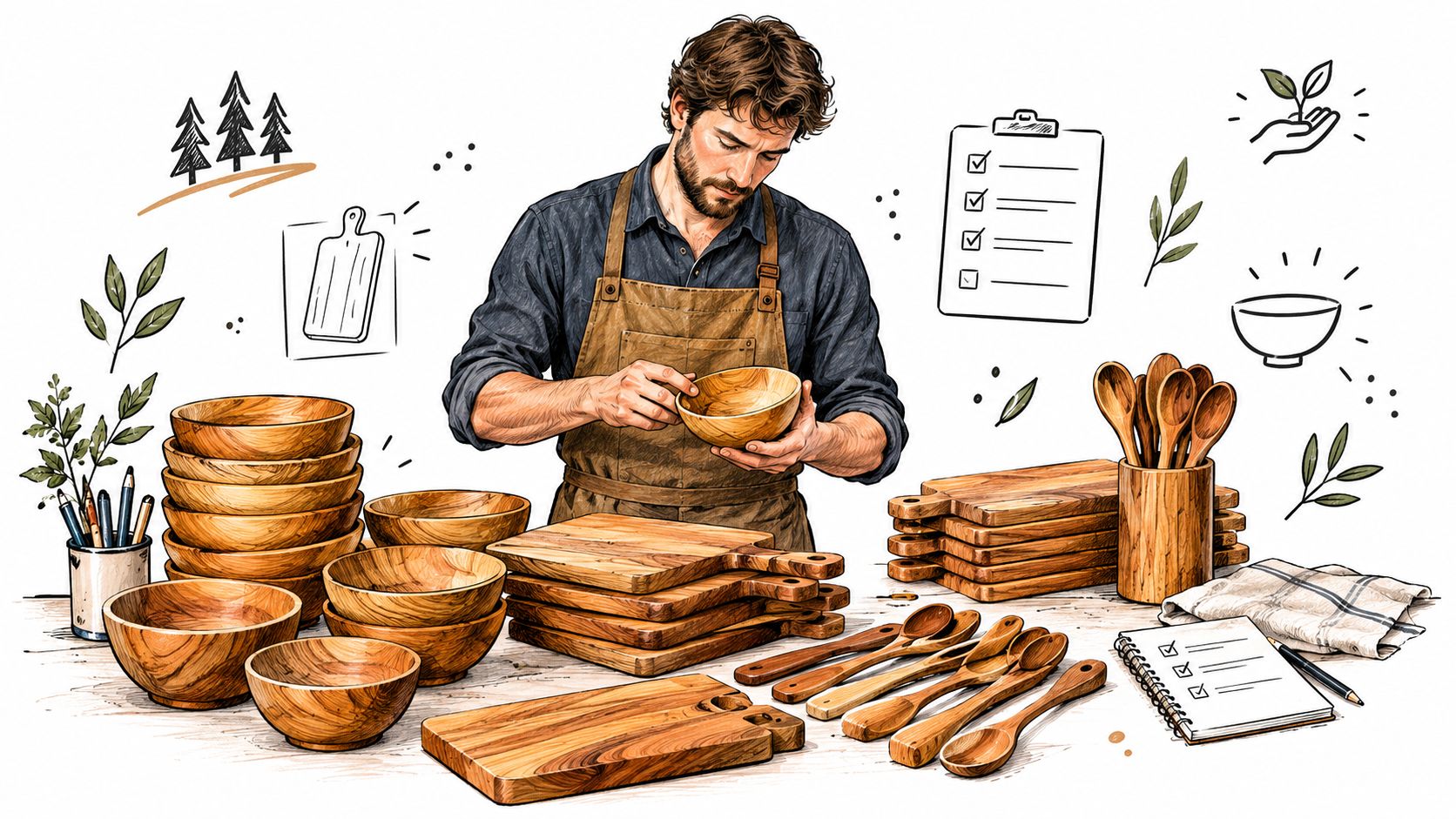
Choose a small starting range
Don't upload every experiment you've ever made. Pick a tight range that makes sense together.
A good starting range often looks like this:
- One hero product. This is the piece people notice first, like a serving board, stool, tray, or shelf.
- One easier add-on. Think coasters, a smaller board, hooks, or a care kit.
- One custom option. For example, engraving a name or choosing a stain colour.
- One bundle. A matching set often feels easier to buy than separate items.
That small range does two useful things. It helps buyers choose faster, and it helps you batch your work. Batch-making matters a lot with wood crafts because setup time, sanding, finishing, and drying can eat your day.
Prepare each product like a buyer sees it
In the workshop, you see timber species, joinery, grain direction, and finishing steps. Online, the buyer sees a photo, a title, a price, and a delivery promise.
So each product needs a basic information pack:
- Plain product name. “Oak Serving Board Large” works better than a clever name nobody understands.
- Real size details. Length, width, depth, and if relevant, weight.
- Material details. State the timber and finish in simple words.
- Use case. Tell people what it's for. Display shelf, grazing board, toy crate, bedside organiser.
- Care instructions. Especially for food-safe or outdoor items.
- Lead time. Be clear if it's ready to ship or made to order.
Don't treat every piece as fully custom
Beginners get trapped. They say yes to every shape, every size, every stain, every engraving, and every “can you just slightly change it?” message. Then every order becomes a one-off project.
A better approach is to give controlled choices:
- Small or large
- Natural, dark, or black finish
- Plain or engraved
- Set of two or set of four
That still feels personal to the buyer, but it keeps your workflow organised.
If your listing needs a long WhatsApp explanation before someone can buy it, the listing isn't ready yet.
Phone photos are enough if you do them properly
You don't need a studio. You do need light, consistency, and clean backgrounds. Use daylight near a window or outside in soft shade. Show the full product, then close-ups of grain, edges, handles, or carved detail. Add one photo that shows scale, like the item on a counter, wall, or table.
If you need a simple guide, this walkthrough on how to take product photos is useful for getting your listings looking clean without fancy gear.
A few photo rules help a lot:
- Keep the background quiet. Don't let tools, paint tins, or laundry distract from the item.
- Show honest detail. If the wood has natural variation, let people see it.
- Repeat the same style. Matching photos make your store look more trustworthy.
- Photograph edges and corners. Buyers worry about finish quality and sturdiness.
Later, this kind of product presentation helps your videos too.
Write descriptions that answer the real worry
They don't need poetic copy. They want to know if the item will suit their space, survive delivery, and look like the photo.
Try covering these points in every description:
- What it is
- What it's made from
- Who it suits
- How big it is
- How long it takes
- How to care for it
A simple, tidy listing beats a dramatic one every time. That's especially true when you're selling wood crafts online, because buyers can't touch the product before paying.
Launching Your Online Store With Local Payments and Shipping
Once your products are prepared, launching the store is mostly admin. Not hard admin, but the kind that becomes frustrating if you skip details.
The goal is a store that can take an order without you jumping between notebooks, DMs, screenshots, and voice notes.
Build the shop around how you actually work
Pick a store name people can remember and spell. If your craft name is hard to type, shorten it. Your domain doesn't need to be clever. It needs to be easy to share on Instagram, Facebook, Google Business, and WhatsApp.
When you add products, group them in a way a normal buyer would understand. “Kitchen”, “Shelving”, “Custom Gifts”, or “Kids Room” is clearer than workshop language.
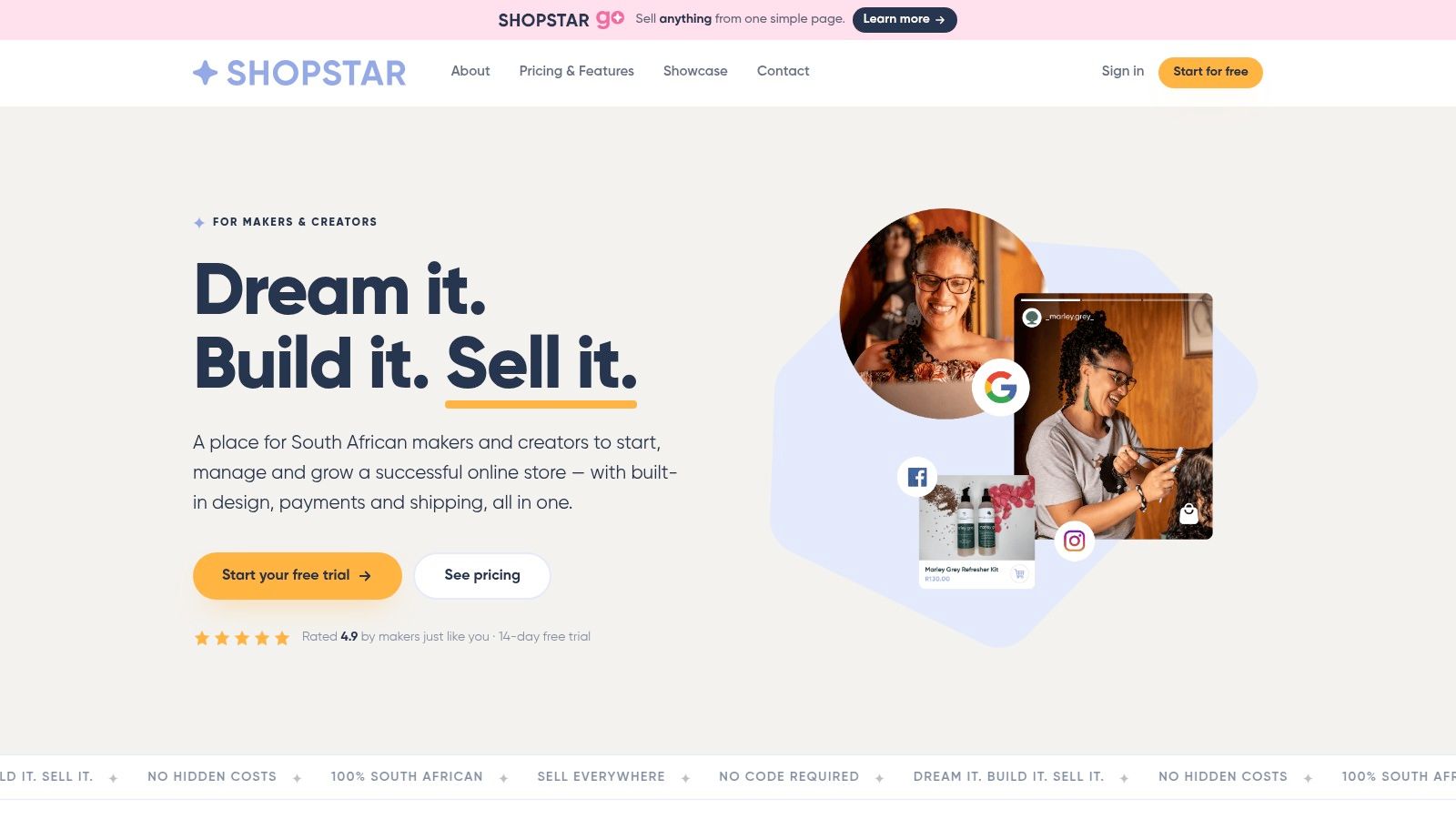
One no-code option South African makers use is Shopstar, which lets you list physical products, manage orders, payments, shipping, and stock in one dashboard.
Set payments up before you start promoting
If buyers must message you for banking details every time, some will drop off. A proper checkout matters, even if you still take custom requests by message.
Recent South African coverage notes that SMEs can use a WhatsApp Business catalogue as a virtual storefront and use payment links through local gateways such as Yoco or Ozow, as explained in this article on selling directly on WhatsApp and TikTok in South Africa. The same report says social commerce accounts for about 6% of online purchases in South Africa, which shows the channel is meaningful, but still early for many small sellers.
That matters because WhatsApp can bring sales fast, but it can also create confusion fast.
A store checkout is where the order becomes real. Without it, you're still chatting, not selling.
Shipping fragile items needs rules, not hope
Wood crafts are awkward because they're not all the same. A spoon, a coat rack, and a bedside table don't ship the same way. The mistake is using one flat delivery rule for everything.
Think in shipping groups:
| Product type | What to watch | Better approach |
|---|---|---|
| Small sturdy goods | Scratches, mix-ups | Use simple packaging and clear labels |
| Flat wall items | Corner damage | Protect corners and avoid loose movement |
| Breakable décor | Chipping, cracking | Double box if needed and pad properly |
| Bulky items | Courier cost shock | Quote separately or limit delivery zones |
You'll also want a clear delivery policy. Set local delivery areas, national courier options, and whether larger items need a custom quote. If you want a practical starter guide, this article on shipping for ecommerce covers the basics in plain language.
Made-to-order products need lead times on the listing
Don't hide the fact that an item is handmade. Use it properly. If a piece takes time, say so upfront. Buyers are usually patient when you're honest before payment. They get frustrated when they expected quick dispatch and only hear about delays later.
Use wording like:
- Made to order
- Dispatch in a set time window
- Custom engraving adds extra time
- Natural wood variation means each piece differs slightly
Test the whole journey yourself
Before sharing your link, do one test order. Buy your own cheapest item or use a test method if your platform allows it. Check every step:
- product page
- cart
- checkout
- payment
- order email
- shipping choice
- stock update
If something feels clumsy to you, it will feel worse to a first-time customer.
Pricing Your Crafts and Sorting Legal Basics Simply
Pricing handmade wood products badly can wreck a business even when orders are coming in. A lot of beginners copy prices from Instagram or local markets, then realise too late that they've been paying themselves almost nothing.
The safer way is to price from the bench upward.
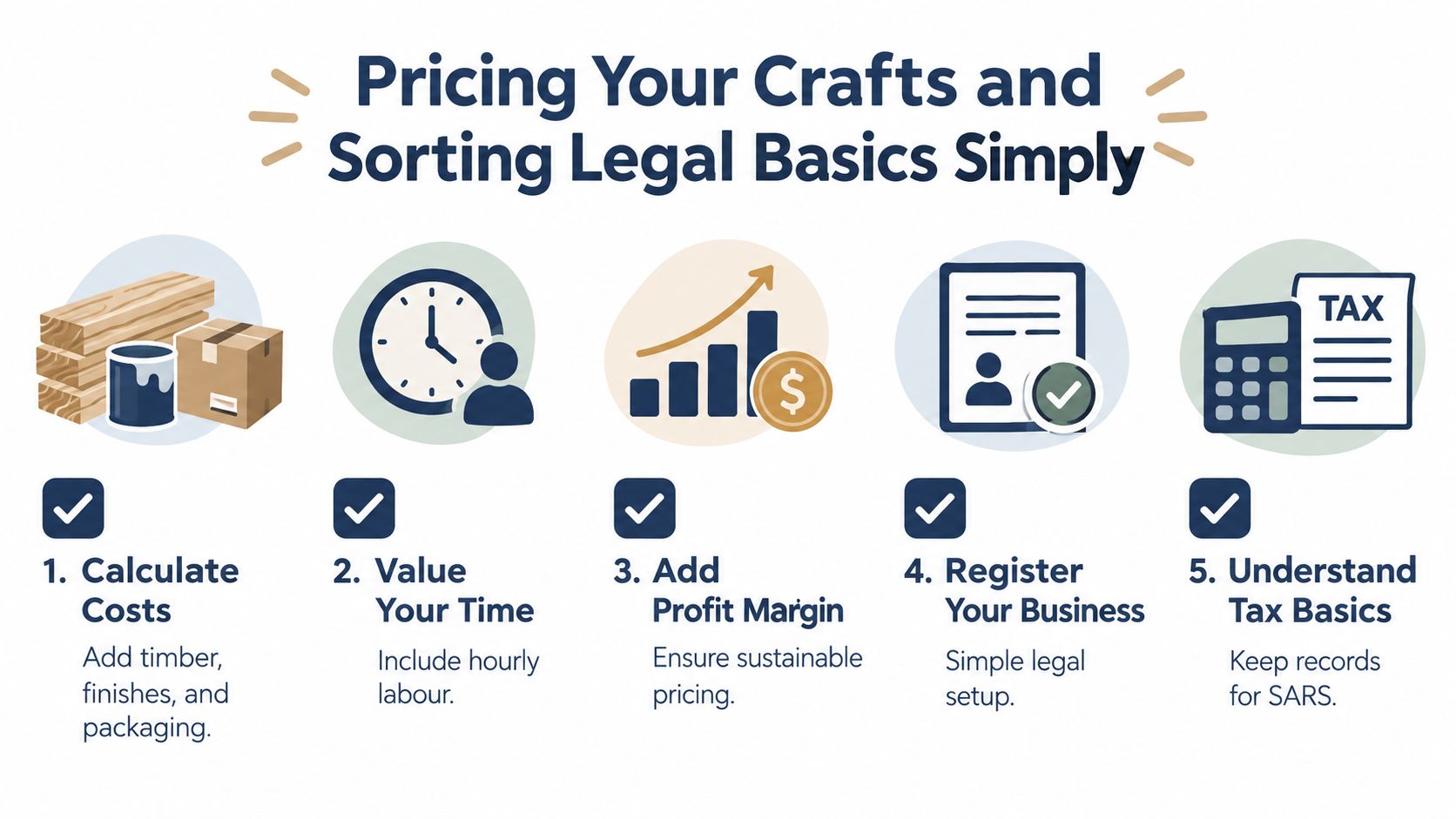
Use a simple pricing formula
Your selling price should cover:
- Timber cost
- Finishes and consumables
- Hardware
- Packaging
- Your labour
- Platform and payment costs
- A profit amount left over
If you miss packaging or your own time, the price may look fine on paper but fail in real life.
A simple workflow helps:
- Write down every material used.
- Add the packaging for that specific item.
- Estimate how long it takes, including sanding, drying checks, oiling, wrapping, and admin.
- Add selling costs.
- Add profit.
Made-to-order work needs boundaries
A custom order is not just “the same thing with a name on it”. It usually includes extra messages, approval time, changes, and a higher chance of delays.
That's why deposits help. They filter out shoppers who are only browsing and protect your time if you've already bought material or started cutting stock. Keep your custom options narrow enough that you can still quote quickly.
South African ecommerce guidance is also getting more practical on this point. A report discussing local ecommerce growth says online sales are on track to pass R130 billion in 2025, and notes that handmade sellers are being advised to batch-make, price for time and materials, and use gift sets to improve sell-through, as covered in this Mastercard newsroom document.
That advice fits wood crafts perfectly. Bundles help smooth out uneven margins. A cheeseboard with matching spreaders, a shelf with hooks, or a planter with a small accessory often sells more cleanly than single low-ticket items.
Price by range, not by mood
One useful habit is creating price bands for your range:
| Range | Typical use |
|---|---|
| Entry item | Gifts and impulse buys |
| Core item | Main everyday seller |
| Premium item | Custom or statement piece |
This keeps your catalogue balanced. If every item is expensive and highly customised, you'll get lots of questions and fewer easy checkouts. If every item is cheap, your labour gets squeezed.
If you want a practical breakdown for handmade products, this guide on how to price handmade items is a good starting point.
Money check: If a product sells well but keeps you exhausted and underpaid, it isn't a good product. It's a busy problem.
Keep the legal side boring and tidy
You don't need to become an expert overnight. You do need clean records from day one.
Keep these basics in place:
- Track every sale. Store order confirmations and payment records.
- Track every cost. Timber, sandpaper, oil, courier materials, labels, tools, and market spend.
- Separate personal and business money if you can. It makes life easier later.
- Keep customer terms clear. Especially for lead times, custom work, and returns.
- Ask a tax professional when the admin starts feeling unclear. That's cheaper than fixing mistakes later.
The aim isn't to sound corporate. The aim is to know what you earned, what you spent, and what each product is really doing for your business.
Finding Customers and Growing Sales Without the Chaos
A live store doesn't bring orders by itself. People need to see your work more than once, trust that you're real, and understand how to buy without sending five messages first.
For a one-person wood workshop, the smartest move is usually to choose a few channels and run them properly, instead of trying to post everywhere all day.
Start where your products are easiest to understand
Wood crafts sell well when buyers can picture them in their homes. That makes visual platforms useful, but it doesn't mean every channel deserves equal attention.
Here's a simple way to choose.
| Channel | Best For | Effort Level |
|---|---|---|
| Showing finish, style, room context, process clips | Medium | |
| Local community reach, family buyers, market updates | Medium | |
| Google Business and search | People already looking for your type of product | Medium |
| WhatsApp Business | Fast enquiries, repeat buyers, custom work follow-up | High |
| In-person markets | Feedback, photos, repeat customer capture | High |
WhatsApp deserves special care. It's often where the first sale happens, but it becomes messy if every conversation lives only in chat.
Use WhatsApp for connection, not for your whole business
WhatsApp works well for:
- Answering quick questions
- Sending a product link
- Confirming a custom detail
- Sharing payment links when needed
- Following up after delivery
It works badly when you use it as your only order system.
A cleaner flow is simple. Let WhatsApp start the conversation, then move the buyer to your actual product page or checkout link. That keeps names, products, payments, and delivery details in one place.
A one-person workshop should also save message templates for things you repeat often:
- lead times
- wood variation notes
- custom order deposits
- care instructions
- delivery timelines
When every customer asks the same question, don't type faster. Fix the listing or save the reply.
Repeat buyers are easier than constant chasing
A lot of makers spend all their energy trying to go viral. That usually isn't the most stable path. Steady sales often come from people who already bought from you, or from someone who saw your work in a friend's home.
Simple ways to encourage repeat business:
- Offer matching products. Someone who bought a shelf may later want hooks or another size.
- Package neatly. People remember the arrival.
- Ask for a photo or review after delivery. Real home photos help future sales.
- Create gift-ready options. Buyers often return for birthdays, housewarmings, and weddings.
- Keep seasonal ideas ready. Market demand shifts during the year.
If you want help getting your products in front of relevant creators or niche audiences without cold messaging random accounts, a structured outreach service from High Country Quilts can be a useful reference point for how creator outreach is organised.
Growth gets easier when your offer gets narrower
This sounds backwards, but it works. Makers often grow faster after cutting products, not adding them. A tighter range is easier to photograph, describe, package, stock, and promote.
South Africa also has a useful export signal for wood-based products. In 2023, South Africa exported US$41.3M in wood carpentry, with major destinations including the United Kingdom, Botswana, Lesotho, Namibia, and the United States, according to South African ecommerce and trade commentary. That doesn't mean a beginner should rush into international selling. It does show there's real demand beyond local borders if your packaging, product fit, and shipping economics are solid.
For handcrafted goods, the export picture gets even more specific. In 2023, South Africa exported US$9.3M in articles of wood, totalling 6,896,210 kg, with the United States, Botswana, Namibia, and Zambia among the top destinations, based on IDC sector trends on articles of wood. The practical lesson is simple. Don't treat every wood item the same. Heavy low-value pieces and light high-value pieces behave very differently once freight enters the picture.
That same thinking helps locally too. Products with a better value-to-size balance are often easier to grow online than bulky items with thin margins.
Your Next Steps to Start Selling With Confidence
Most beginners wait too long because they think they need a full brand, a giant catalogue, and perfect systems before starting. You don't. You need a few products that are ready, a price that makes sense, a delivery plan, and a simple way for people to pay.
The strongest setup is usually the simplest one. A small range. Clear photos. Honest lead times. Tight custom options. One place for orders. That combination saves you from the chaos that burns out a lot of good makers.
A useful seven-day push could look like this:
- Day one. Choose your first three to five products.
- Day two. Write names, sizes, care notes, and lead times.
- Day three. Take clean photos in consistent light.
- Day four. Finalise pricing, including packaging and your time.
- Day five. Set up delivery rules and custom order terms.
- Day six. Load products into your store and do a test order.
- Day seven. Share one product link on WhatsApp, Instagram, and Facebook.
Keep your attention on what buyers need. They want to trust the product, understand the process, and feel confident about paying. If you give them that, you're already ahead of many handmade sellers who only post pretty photos and hope for the best.
Selling wood crafts online gets easier once your workshop and your sales process start talking to each other. That's the shift. You stop making random stock and start building products that are easy to repeat, easy to explain, and worth selling.
If you want a practical way to get your wood crafts online without wrestling with complicated tech, Shopstar gives you a South African store setup with local payments, shipping, and order management in one place. It suits makers who need a clean system for handmade products, custom orders, and everyday selling, so you can spend less time patching tools together and more time making.